BPC-157 Is The Most Powerful Healing Peptide You Are Not Using
BPC-157 is a remarkable peptide naturally found in human stomach acid, designed to accelerate healing throughout the body. It works by promoting blood vessel growth, reducing inflammation, and protecting cells from damage. For users, this means faster recovery from injuries to tendons, muscles, and even the gut. You typically administer it via injection near the injury site or take it orally for digestive support.
What Exactly Is This Peptide and Why Is It Getting So Much Attention?
BPC-157 is a synthetic peptide derived from a protein found in human stomach acid, engineered to promote healing in the body. What sets it apart and drives its massive attention is its remarkable ability to accelerate repair of soft tissues—tendons, ligaments, muscles—often dramatically faster than natural recovery. Users report it can swiftly quell inflammation and protect the gut lining, making it a dual-action compound for both injuries and digestive distress. Its appeal lies not in being a cure-all, but in targeting regeneration at the cellular level where other interventions falter. This unique systemic healing response has made it a focal point for athletes seeking rapid recovery from strains and tears, while the promise of gut repair draws those with chronic intestinal issues. The buzz stems from real, practical outcomes: users experience tangible, accelerated healing after injury or surgery.
The Unique Mechanism That Sets It Apart From Other Repair Agents
BPC-157’s unique mechanism is its modulation of the nitric oxide (NO) system, a pathway most repair agents overlook. Instead of merely stimulating growth factors, it upregulates the eNOS enzyme in injured tissue, optimizing blood flow and angiogenesis specifically where damage exists. This targeted NO-mediated response accelerates tendon, ligament, and gastrointestinal healing without the systemic inflammation or fibrosis common with other agents. Unlike general mitogens, BPC-157 restores cellular signaling rather than just pushing proliferation, reducing scar tissue formation.
How It Interacts With Growth Hormone Receptors to Speed Recovery
BPC-157 accelerates recovery by directly upregulating growth hormone receptors on damaged tissues. This interaction amplifies the body’s natural repair signals: the peptide binds to these receptors, increasing their sensitivity and density. The sequence unfolds as follows:
- BPC-157 stabilizes the receptor complex on cell membranes;
- it triggers a surge in downstream signaling pathways, notably the FAK-paxillin and PI3K-Akt cascades;
- this drives rapid angiogenesis and collagen deposition at the injury site.
The result is a dramatic shortening of healing time for tendons, ligaments, and soft tissue, without relying on exogenous hormones.
Key Benefits Backed by Research
Research indicates that BPC-157 primarily supports accelerated tissue repair, with studies showing enhanced healing of tendons, ligaments, and muscle injuries. It promotes angiogenesis, increasing blood flow to damaged sites, which is crucial for recovery. The peptide also demonstrates protective effects on the gastrointestinal lining, reducing inflammation in models of colitis and gastric ulcers. Neurological research suggests it may facilitate nerve regeneration following trauma. These findings are based on preclinical models, highlighting its direct role in modulating healing pathways without systemic side effects.
Accelerated Healing for Tendons, Ligaments, and Muscles
BPC-157 significantly accelerates the repair of tendons, ligaments, and muscles by promoting angiogenesis and modulating growth factors at the injury site. Research indicates it can reduce recovery time for strains, tears, and ruptures, directly stimulating fibroblast activity to rebuild collagen fibers. For chronic tendinopathies, it helps resolve inflammation without hindering structural regeneration. Soft tissue injury recovery is markedly improved, often restoring range of motion faster than natural healing.
Q: Can BPC-157 heal a complete muscle or ligament tear?
A: While it markedly accelerates the healing cascade and tissue integrity, complete ruptures often still require surgical reattachment; however, BPC-157 significantly speeds post-surgical recovery and strengthens the repair site.
Protecting and Repairing the Gut Lining
BPC-157 directly targets the gastrointestinal epithelium to accelerate the repair of damaged gut lining. It stimulates angiogenesis and increased blood flow to injured intestinal tissue, while promoting the expression of growth factors that rebuild tight junctions and mucosal integrity. This peptide is particularly effective in cases of leaky gut, inflammatory bowel conditions, or damage from NSAIDs. For optimal repair, studies suggest a practical sequence: initiate BPC-157 administration, reduce inflammatory triggers, and then support regeneration with specific amino acids. The outcome is a restored barrier function, reduced permeability, and relief from associated systemic inflammation.
- Administer BPC-157 to kickstart cellular repair processes in the gut lining.
- Simultaneously eliminate gut-irritating foods and NSAIDs to prevent further damage.
- Allow the regenerated mucosal barrier to reseal and reduce intestinal permeability.
Reducing Inflammation Without Suppressing the Immune System
BPC-157 offers a distinct advantage by targeting inflammation through tissue repair modulation rather than immune blockade. This peptide accelerates healing by promoting blood flow and growth factor activity at injury sites, which naturally resolves inflammation. Unlike corticosteroids or NSAIDs that suppress cytokine pathways, BPC-157 reduces swelling and pain without compromising the body’s infection defenses. This allows the immune system to remain fully operational against pathogens. Research indicates its mechanism balances pro-inflammatory and anti-inflammatory signals, preventing chronic inflammation while preserving the immune system’s protective integrity. Users recover faster from injuries, gut issues, or joint pain without the heightened infection risk or gut damage tied to traditional anti-inflammatories.

How to Use It Effectively
To use BPC-157 effectively, prioritize subcutaneous injection near the site of injury for targeted systemic absorption. For acute strains, administer 250–500 mcg once or twice daily, cycling for 4–6 weeks, then pausing. Oral forms are less reliable for tendon issues due to gastric breakdown.
Effectiveness skyrockets when you pair the peptide with a low-grade inflammatory stimulus, like light movement or massage, to guide repair where it’s needed.
Always use bacteriostatic water for reconstitution, store in the fridge, and rotate injection spots to prevent tissue irritation.
Determining the Right Dosage Based on Your Injury Type
Dosage for BPC-157 is injury-specific, demanding a tailored approach for effective recovery. For acute muscle or ligament tears, a higher range of 400–500 mcg daily, split into two 200–250 mcg doses, is common for the first week. For chronic tendinopathy or joint issues, a lower maintenance dose of 200–300 mcg per day often suffices. For gastrointestinal mucosal injuries, protocols frequently favor 150–250 mcg once daily. Determining the right dosage based on your injury type requires matching the dose to the tissue’s blood flow and healing rate.

- Identify the injury category (acute, chronic, or gut).
- Select the corresponding dose range from the guidelines.
- Administer for 4–6 weeks, then assess if dosage adjustment is needed.
Injection Techniques: Subcutaneous vs. Local Site Application
For BPC-157, the main choice is between subcutaneous and local site injections. Subcutaneous, typically into belly fat, is easiest for systemic healing but less targeted. For direct tendon or joint relief, local site application is better. Inject as close to the injury as possible, angling the needle carefully to avoid nerves. A clear sequence helps:
- Choose your spot—abdominal skin for general recovery, or directly near the specific damage site.
- Clean the area with an alcohol wipe.
- Pinch the skin, insert at a 45-90 degree angle, and inject slowly.
- Withdraw and apply gentle pressure—no rubbing.
Always rotate injection sites to prevent irritation.
Optimal Timing and Cycle Length for Maximum Results

For BPC-157, optimal results hinge on administering doses twice daily—morning and evening—to maintain stable plasma levels during the body’s natural repair cycles. Cycle length should be limited to 4 weeks, as prolonged use beyond this period yields diminishing returns due to receptor tachyphylaxis. A subsequent 4-week off-phase is critical to reset sensitivity, ensuring the next cycle’s efficacy. Shorter cycles of 2 weeks may suffice for acute, localized injuries, whereas chronic conditions demand the full 4-week duration for sustained tissue remodeling. Timing of administration relative to injury load further modulates outcomes: dosing immediately after activity amplifies the repair cascade when tissue demand peaks.
Optimal BPC-157 results come from twice-daily dosing over 4 weeks, followed by a 4-week break, with timing aligned to post-activity recovery windows for maximum repair response.
Practical Tips for First-Time Users
For first-time users, starting with a low dose is critical; begin at 250 mcg per day to assess tolerance before any increase. Administer BPC-157 subcutaneously near the target area, rotating injection sites daily to prevent tissue irritation. Always reconstitute lyophilized powder with bacteriostatic water and refrigerate the solution, discarding after 30 days to maintain peptide stability. strate labs Avoid combining with other peptides initially to isolate effects. Monitor for any adverse reactions like injection-site soreness, and cycle off after 8 weeks with a 4-week break to prevent long-term desensitization. Do not use if pregnant or nursing.
What to Expect During the First Week of Use
During the first week of BPC-157, you likely won’t feel an immediate “kick.” Instead, expect subtle shifts. Many users notice a gradual dulling of localized pain, perhaps in a joint or tendon, rather than a sudden fix. You might also feel improved general recovery from workouts or daily strain. To gauge effects accurately, follow this sequence:
- Log your baseline pain level on day one.
- Apply BPC-157 consistently at the same time each day.
- Jot down any changes in soreness or mobility by day three.
- Reassess by day seven—if you feel no difference, adjust dosing or consult guidance.

Stacking It With Other Peptides for Synergistic Effects
For first-time users, stacking BPC-157 with other peptides targets synergistic recovery. Combining it with TB-500 often accelerates soft tissue healing, as TB-500 enhances cell migration while BPC-157 boosts angiogenesis. A common practical approach is administering BPC-157 post-injury to stabilize the area, then adding TB-500 after 48 hours to amplify systemic repair. Stacking with thymosin alpha-1 may support immune modulation during chronic healing. Always stagger doses by at least 30 minutes to prevent competition for absorption sites, and start with low standalone BPC-157 doses before introducing any peptide protocol stacking. Monitor for altered efficacy or side effects for two weeks before adjusting ratios.
Stacking BPC-157 with complementary peptides like TB-500 or thymosin alpha-1 creates targeted synergistic effects, but first-timers must stagger dosing and monitor responses to optimize combined healing outcomes.
Storage and Handling to Preserve Potency
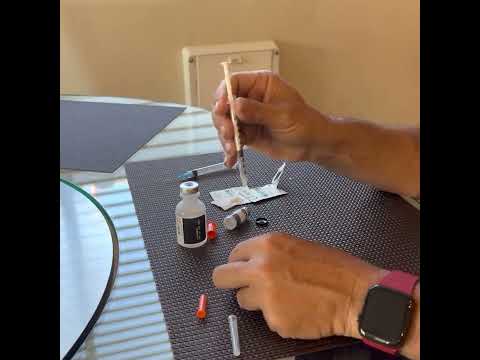
To protect BPC-157 from degradation, store the lyophilized powder in a freezer at -20°C (-4°F), away from light. Once reconstituted with bacteriostatic water, refrigerate immediately at 2–8°C to preserve potency. Follow this sequence:
- Remove vial from freezer and let it reach room temperature before opening to prevent moisture condensation.
- Reconstitute gently by injecting water along the vial wall, avoiding agitation that damages peptides.
- Use sterile syringes for each withdrawal, wiping the septum with alcohol to avoid contamination.
Discard any reconstituted solution after 30 days, as potency diminishes over time. Never freeze a reconstituted vial, as ice crystals can disrupt the peptide structure and reduce effectiveness. Keep containers sealed and protected from heat sources.
Common Questions About Side Effects and Safety
Users frequently ask about the common side effects and safety of BPC-157. Most short-term reports indicate it is generally well-tolerated, with rare instances of mild nausea, headache, or injection site discomfort. No significant long-term human studies exist, so the safety profile beyond a few weeks is unknown. A critical concern involves injecting near an active infection or tumor, as BPC-157’s pro-angiogenic action could theoretically stimulate growth or spread. For specific dosing and medical clearance, always consult a qualified practitioner who understands peptide therapy.
Is It Safe for Long-Term Use or Repeated Cycles?
There is no established consensus on the safety of long-term BPC-157 use due to the absence of formal human trials for repeated cycles. Most user reports involve cycles of 4–8 weeks, followed by breaks of equal length to mitigate unknown risks. A potential concern is tumorigenesis, as BPC-157 promotes angiogenesis, which theoretically could accelerate growth of pre-existing, undetected cancers. For repeated cycles, a clear sequence is prudent:
- Complete a cycle of 4 weeks maximum.
- Take an off-period of at least 4–6 weeks.
- Monitor for any unusual pain or swelling before restarting.
Without longitudinal data, indefinite use is not advised, and cycling with extended breaks remains the most cautious approach to minimize hypothetical long-term side effects.
How to Spot and Manage Mild Reactions
Mild reactions to BPC-157, such as slight redness at the injection site or temporary fatigue, are typically brief and self-limiting. Spotting mild reactions early involves monitoring for localized tenderness or a subtle dip in energy within hours of dosing. To manage these, pause use for 24 hours; if symptoms fade, resume at a lower dose. Topical antihistamines can soothe injection-site irritation, but systemic symptoms warrant a break. Q: How do I know if a reaction is mild versus problematic? A: If symptoms resolve within 12 hours without spreading or worsening, it’s likely mild. Persistent swelling or breathing changes require stopping and seeking medical advice.
Who Should Avoid This Peptide Entirely
Individuals with a history of cancer should avoid BPC-157 entirely, as the peptide’s promotion of angiogenesis and cell proliferation could theoretically stimulate tumor growth or metastasis. Anyone taking anticoagulants or antiplatelet medications must also refrain from use, because BPC-157 may enhance bleeding risk by modulating clotting factors. Pregnant or nursing women lack safety data, making avoidance the only prudent choice. Those with diagnosed autoimmune disorders should similarly abstain, since BPC-157’s immunomodulatory effects might trigger unintended inflammatory flares. Even individuals with unidentified gastrointestinal lesions carry unknown risk, because wound-healing acceleration could mask underlying pathologies. Patients on blood thinners face the most immediate danger due to potential hemorrhagic complications.